

The Economics of Survival: A Bold Vision for Transforming Belize’s Underground Economies
- The Hydesman Post Editorial Team

- Jun 16, 2025
- 4 min read

In the heart of Central America, Belize stands at a crossroads, one shaped by generations of systemic marginalization, economic exclusion, and survival-driven choices. At the same time, a new industry is on the horizon: the regulated cannabis sector. As conversations about legalization grow louder, so does the need for a deeper, more honest reflection on how we move forward, not just legally, but morally and economically.
For too long, we’ve treated the underground economy as an enemy of the state, and those participating in it as inherently criminal. But what if, instead, we saw them as entrepreneurs forced into the margins by a system that never gave them a seat at the table? What if we acknowledged that the so-called “criminals” of today are in fact survivors, highly adaptive, often brilliant individuals responding to an economic structure that never included them?

Belize has an opportunity not just to legalize cannabis, but to decriminalize survival itself. This means creating intentional, structured programs, workshops, business development training, licensing support, and equity-based partnerships, for those currently in the informal cannabis trade. It means not boxing them out while elites move in to dominate a newly regulated market. And it means realizing that public safety and economic justice are not opposing forces, they are two sides of the same coin.
Restorative Justice as Economic Policy
True justice isn’t only about the enforcement of laws, it’s about acknowledging harm, restoring dignity, and building a better future. For decades, individuals from historically marginalized communities in Belize have faced arrest, violence, and social exclusion for participating in informal economies like cannabis. These weren’t choices made in luxury, they were decisions rooted in the basic human instinct to survive when all other doors were closed.

Now, with Belize considering a formal cannabis industry, we must not repeat the cycle of exclusion. These communities, these individuals, deserve first preference in licensing, support, and ownership. This isn’t charity. It’s not even just policy. It’s restorative justice. It’s repairing a broken system by recognizing who’s paid the price and ensuring they now reap the rewards.
Instead of displacing them, we should elevate them. Train them, fund them, give them the platform to turn their knowledge and hustle into legitimate enterprise. That’s how you build peace, not through punishment, but through purposeful opportunity.
From Survival to Structure: Building Pathways to Legitimate Ownership
If Belize is to create a truly inclusive cannabis industry, it needs more than just laws, it needs a strategy rooted in equity and long-term community investment. That begins with giving licensing preference to those who’ve been historically involved in the informal cannabis trade. But it must go further.

Picture training centers across the country, offering education in business, compliance, farming techniques, co-led by public agencies, private investors, and community organizations. Pair that with access to financing: grants, low-interest loans, and micro-funds tailored to those transitioning from the underground economy.
Then imagine community equity models, where businesses are partially owned by local residents. That means profits don’t just enrich a few, but flow back into neighborhoods: funding youth programs, mental health care, infrastructure, and schools.
On top of that, a portion of all cannabis tax revenue should be legally reinvested into the communities most impacted by criminalization. That creates a sustainable cycle, where justice and economic growth reinforce each other.
Guardrails of Responsibility: Protecting Our Youth, Honoring Our Integrity

As we reimagine the cannabis economy in Belize, we must lead with foresight and care. This is not a free-for-all. It is a structured opportunity to build a healthier, fairer, more resilient society. And that means drawing clear lines.
Children and minors must be explicitly protected from every aspect of this industry, farming, processing, distribution, and consumption. This is a line we do not cross. Exploiting young people in pursuit of economic gain would only repeat the same injustices we are trying to correct.
Just as importantly, we must invest in education. The public, especially youth,deserve honest, science-based information about how early cannabis use can affect brain development, mental health, and long-term well-being. This is about respect, not restriction. It’s about equipping the next generation with knowledge, not fear.
Our goal must be to promote healthy consumption, responsible access, and community-wide awareness. Because a just society isn’t only one that includes the excluded—it’s one that protects the vulnerable and honors the truth.

A Vision for a Just Future
This isn’t just about cannabis. It’s about rewriting the social contract. It’s about recognizing that when systems fail, people adapt, and instead of punishing that adaptation, we need to channel it into purpose. The youth growing up in Belize’s most vulnerable neighborhoods don’t need more patrols, more prisons, or more shame. They need possibility. They need respect. They need a chance.
A truly just cannabis industry in Belize would be one where those who once risked everything just to survive are now seen as pioneers of a new economy. Where those once labeled criminals become CEOs, landowners, and mentors. Where restorative justice is not just an idea, it’s a policy, a program, and a promise.
Let us be bold enough to build it. Let us be wise enough to learn from our past. And let us be just enough to know that when we uplift the most excluded among us, we rise as a nation.
Disclaimer:
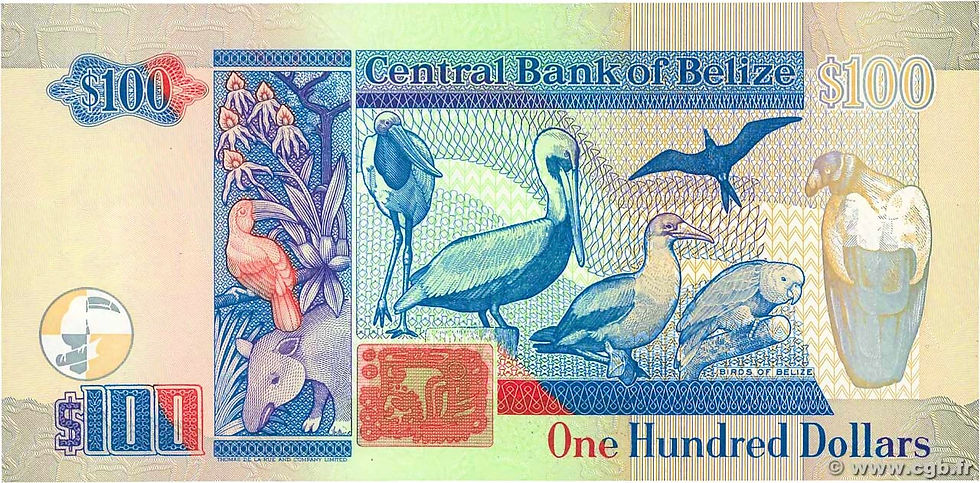
This editorial includes images of Belizean currency for cultural, educational, and economic commentary purposes only. The intent is to celebrate Belize’s national heritage and highlight pathways for equitable economic transformation. We firmly denounce any and all forms of currency counterfeiting or misuse. Unauthorized reproduction or manipulation of legal tender is strictly prohibited and punishable under local and international law. All imagery is used respectfully, in accordance with fair use principles, and to advance national dialogue, not criminality. We urge all readers to honor the law, uphold Belize’s sovereignty, and engage responsibly with national symbols.


Comments