

Magna Carta and the Eternal Struggle Against Concentrated Power
- Sylvian Hyde

- May 18
- 5 min read
There are documents in history that function less like paper and more like seismic events. Magna Carta is one of them.
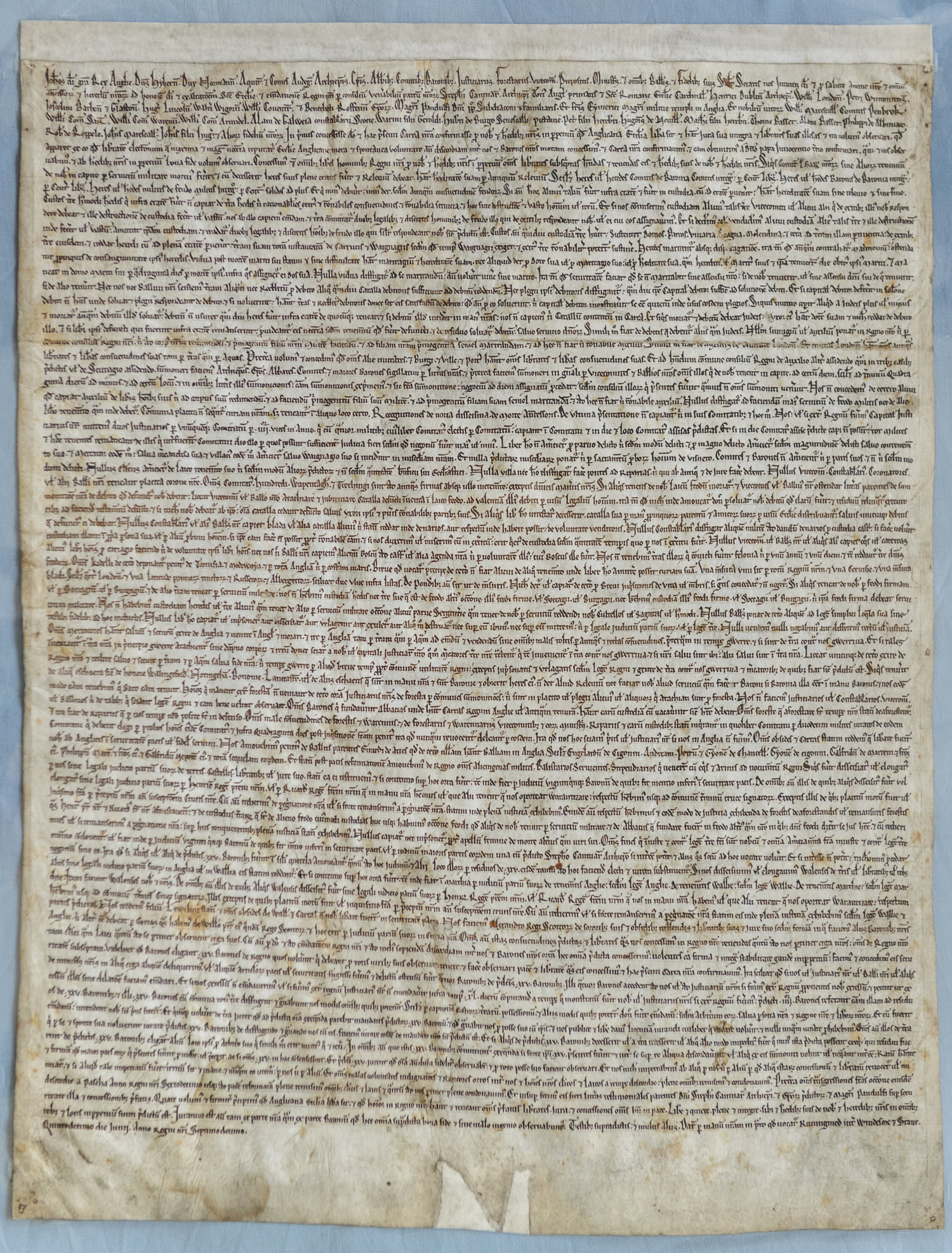
Sealed at Runnymede in 1215 under mounting pressure from rebellious English barons, the charter emerged during a moment of profound political crisis. King John’s reign had become associated with excessive taxation, arbitrary royal authority, military failure, legal unpredictability, and increasingly extractive forms of governance. What began as a confrontation between a king and his nobles would eventually evolve into something far larger than either side could have imagined.

Eight centuries later, its echoes remain everywhere. For anyone raised within the Commonwealth, particularly in places like Belize where British legal and parliamentary inheritance still shapes national life, Magna Carta is not merely British history. It forms part of the hidden constitutional architecture beneath much of the modern world. That is what makes it so extraordinary.
China may represent one of the world’s oldest continuous civilisations, yet much of the contemporary global legal and parliamentary framework still operates downstream from institutional struggles that emerged from medieval England. The language of limits on state power, due process, contractual rights, parliamentary negotiation, property protections, representation, and legal restraint did not materialise fully formed overnight. These systems evolved through centuries of conflict between rulers, nobles, merchants, clergy, guilds, emerging commercial classes, and ordinary people attempting to negotiate the boundaries of authority itself.
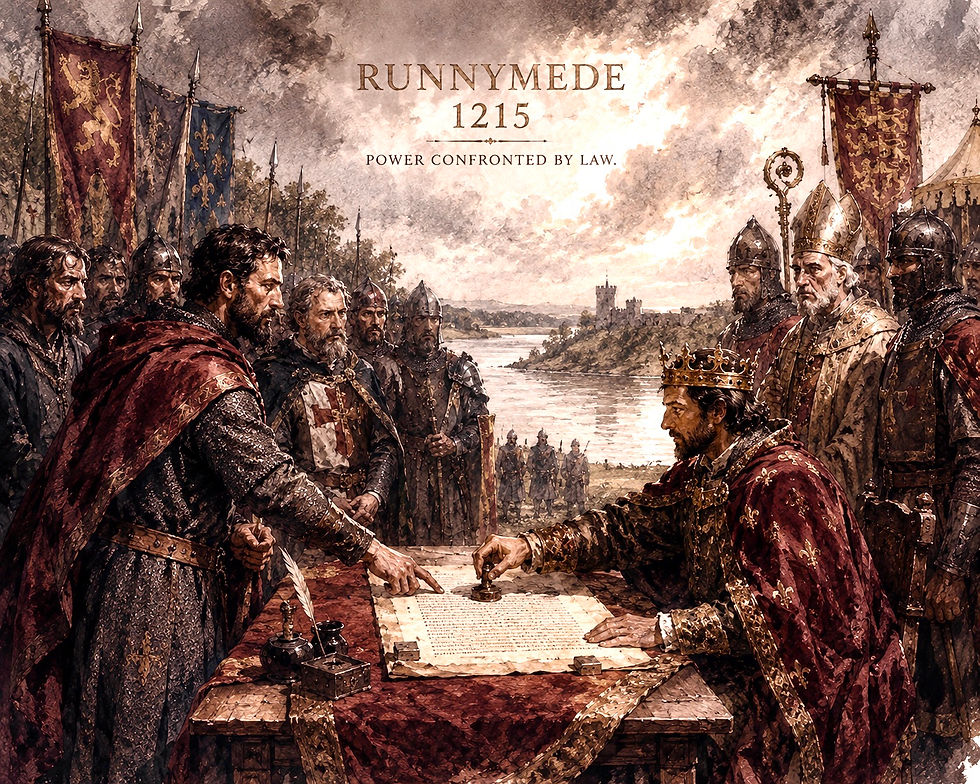
The charter represented one of the earliest formal acknowledgements that even sovereign power could be constrained by law. That idea changed history. Not immediately. Not universally. And certainly not perfectly. But once introduced into political consciousness, the principle could never be entirely contained again.
What makes the story particularly fascinating is that the charter did not emerge in isolation. Medieval English society itself was undergoing profound transformation. New merchant classes were rising. Chartered boroughs and towns were developing. Commercial networks were expanding beyond rigid feudal structures. Trading liberties allowed certain markets to operate with greater autonomy from arbitrary local interference. Guild systems regulated commerce, protected members, enforced standards, controlled access to professions, and often functioned as institutional gatekeepers into economic life itself.

Access mattered then just as it matters now. Membership within many of these systems frequently required sponsorship, wealth, lineage, political proximity, or payment. Entire classes of people found themselves negotiating structures designed to preserve concentrated advantage while simultaneously depending upon broader participation for economic growth. That tension feels remarkably modern. One of the deepest lessons embedded within the history of Magna Carta is not merely moral or constitutional. It is economic. Highly extractive systems may generate short-term control, but they often suppress the very innovation, trust, mobility, and prosperity societies require to thrive long-term.
Throughout history, periods that expanded participation and introduced greater legal predictability repeatedly unleashed extraordinary human ingenuity. Competition produced better goods. Merchant classes expanded. Alternative commercial systems emerged. New financial networks developed. Innovation accelerated precisely because concentrated power was forced to negotiate with wider society rather than simply dominate it outright.
Human progress repeatedly emerges from this friction.

Once people began recognising that limitations could be imposed upon sovereign authority itself, the logic spread outward through civilisation. If kings could be constrained, why not monopolies? Why not closed systems? Why not entrenched institutional privileges? Why not arbitrary economic control? The implications became revolutionary over time.
The charter’s influence travelled astonishingly far. It shaped the evolution of Parliament. It echoed through the Petition of Right and the English Bill of Rights. It informed colonial governance structures, including the Virginia Charter of 1606, which extended the liberties and protections of English subjects into the colonial world. It travelled into American constitutional development. It influenced common law traditions across the Commonwealth. Indirectly, it helped shape much of the democratic and legal vocabulary modern societies now inherit as though it were inevitable.

It was never inevitable. Every institutional protection people now take for granted was once contested territory. Perhaps this subject resonates so deeply with me because I grew up around politics, law, and business in Belize. That proximity teaches you very early that human nature scales. The struggles may wear different uniforms across centuries, but the underlying dynamics remain remarkably consistent. The same tensions between concentrated power and wider participation repeat themselves across governments, markets, corporations, empires, and institutions. Everything scales up.
If Magna Carta reflected the anxieties of medieval England, then modern societies are still negotiating many of those same anxieties now, only through different machinery and at planetary scale.
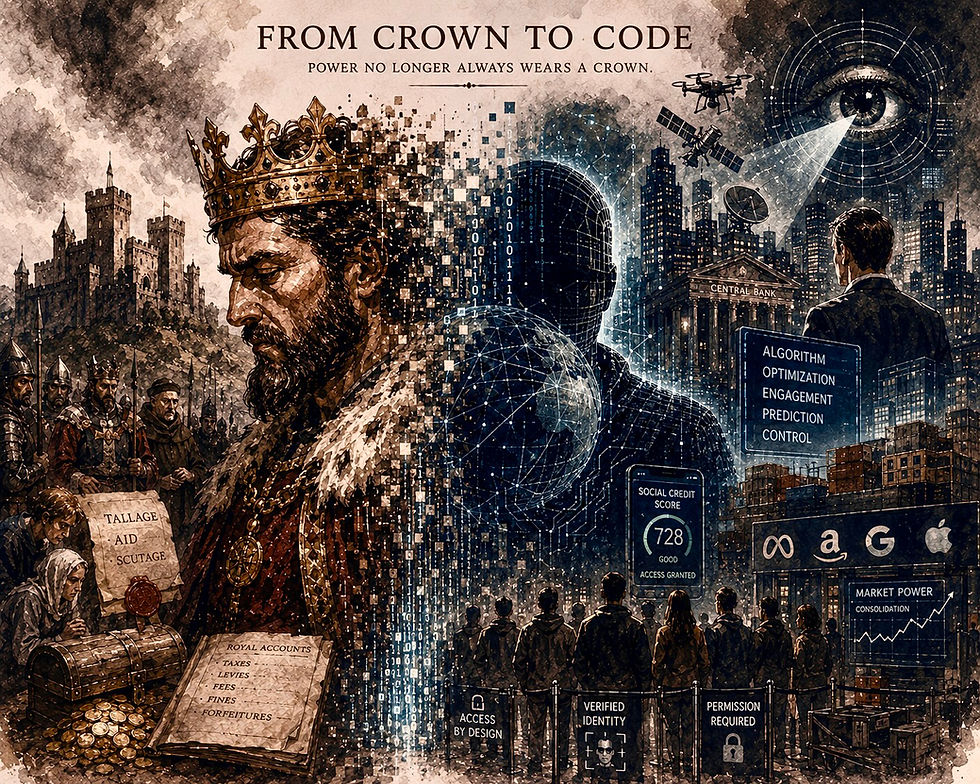
Today the world once again finds itself debating concentrated power. Political systems grow more centralised. Corporate consolidation expands. Digital platforms mediate communication, commerce, labour, and visibility. Algorithmic systems increasingly shape opportunity, behaviour, and economic participation. Questions surrounding ownership, surveillance, gatekeeping, labour, mobility, autonomy, and institutional trust increasingly dominate public anxiety about the future.
The language has changed. The technology has evolved. The underlying struggle remains strikingly familiar. Human beings continue wrestling with the same ancient question. How much power can any system accumulate before participation itself becomes illusion? That question haunted medieval England. It haunted empires. It shaped industrial capitalism. It fuelled colonial resistance movements. And now it quietly re-emerges inside technological civilization .

This is why Magna Carta still matters. Not because a medieval document can simply be copy-and-pasted onto the modern world, but because the principle beneath it remains permanently relevant. Power requires restraint. Institutions require accountability. Prosperity requires participation. Societies stagnate when too few people control too much access for too long.
That lesson applies to monarchies, governments, corporations, markets, and increasingly, it applies to technological systems shaping modern life itself. Civilisation advances not merely through power, but through the gradual negotiation of limits upon power. That is the enduring legacy of Magna Carta. Not perfection. Not utopia. But the refusal to accept that authority should ever exist without restraint.


Comments